A research-informed guide to the digital mental health tools available to college campuses.
Mental health has become one of the defining challenges on college campuses around the world. Counseling centers are overwhelmed, waitlists are long, and the gap between the number of students who need support and those who receive it has become substantial.
As a result, a new generation of digital tools is offering colleges and students a practical way to begin closing that gap. But not all digital mental health tools are created equal — and the evidence gap is significant. A May 2024 investigation by The Chronicle of Higher Education found that, among an estimated 10,000 to 20,000 digital mental health offerings on the market, researchers reviewing the nine platforms most commonly purchased by colleges found little, no, or outdated evidence of effectiveness in many cases. Sarah K. Lipson, an associate professor at Boston University’s School of Public Health, described “a remarkable lack of evidence about the use of digital mental health interventions and their effectiveness.” For campus administrators, the challenge becomes knowing which tools are actually backed by rigorous science.
This guide examines the current state of student mental health, what AI apps can realistically offer college students, and what the research actually shows. It also provides practical guidance for students, parents, and campus administrators trying to decide which tools are worth using.
The scale of the mental health crisis on college campuses is well documented and continues to grow. The Healthy Minds Network, which surveys hundreds of thousands of students annually across U.S. colleges and universities, provides some of the most comprehensive data available. According to the 2024–2025 Healthy Minds Study (N = 84,735):
45% of students screen positive for depression or anxiety.
68% report that mental health difficulties negatively impacted their academic performance at least one day in the past month.
63% of students report needing mental health support, yet only 38% received counseling or therapy in the past year.
27% report non-suicidal self-injury, and 11% seriously considered suicide, with 5% making a plan and 2% attempting suicide.
These figures point to a system under structural strain. Even as awareness of mental health has increased dramatically among young people, the infrastructure to meet that need has not kept pace. Many institutions have begun implementing the Stepped Care Model (or Stepped Care 2.0) for campus mental health — a framework that delivers the least intensive effective intervention first while ensuring clear pathways to higher levels of care when needed. Digital tools have emerged in this context as a way to extend support to students who may otherwise receive little or no support.
The digital mental health landscape for students spans several distinct categories. Understanding the differences helps students and administrators choose the right tool for the right need.
Platforms such as TimelyCare, Mantra Health, Uwill, BetterMynd, and Talkspace connect students with licensed therapists through video, audio, or messaging-based teletherapy. These services are appropriate for students who need ongoing professional clinical support and prefer flexible, remote access to care. Many universities now partner with teletherapy providers to extend counseling capacity beyond on-campus counseling centers and offer students support outside traditional office hours.
A newer and rapidly emerging category of digital mental health tools uses purpose-built, personalized conversational AI platforms to support student well-being. These platforms engage students through AI-powered coaching, offering daily emotional check-ins, science-based well-being activities, and adaptive guidance. Examples include Flourish, Wayhaven, Wysa, and Woebot, which provide AI-guided conversations and well-being exercises designed to help users manage stress, anxiety, depression, and everyday emotional challenges. Some of these apps, such as Flourish, also integrate additional modalities—including skill-building, mindfulness techniques, and peer support—to create a more comprehensive experience.
Apps such as Sanvello, TAO, Schmoody, Nod, and MindShift CBT deliver structured cognitive behavioral therapy exercises, mood tracking, and psychoeducation. These tools are typically more module-based and offer accessible skill-building for students managing anxiety, depression symptoms, loneliness, or stress.
Headspace, Calm, and Insight Timer focus on mindfulness meditation, breathing regulation, and sleep improvement. These address the physiological dimensions of stress effectively and are particularly useful as daily regulation tools alongside other support.
Organizations and platforms such as Active Minds, the JED Foundation, ULifeline, and Togetherall provide peer-based mental health communities, educational resources, and moderated support networks specifically for college students. These tools are valuable complements to both clinical and digital services.
Platforms such as You @ College and CampusWell focus on helping students discover, access, and engage with wellness resources. These tools aggregate campus services, events, and curated health content—including articles, videos, and campaigns—into centralized digital hubs. Hence, these platforms play an important role in awareness-building, health promotion, and resource navigation, helping students understand what support is available and how to access it.
While many early digital mental health tools focus on a single function, newer platforms are beginning to integrate multiple forms of support into a single system. For instance, in Flourish, AI-powered well-being coaching serves as a central interface that connects evidence-based activities, peer support, and campus resource navigation within one cohesive platform. Similarly, platforms like TimelyCare and Mantra Health are expanding beyond teletherapy to offer a broader suite of services—including on-demand counseling, scheduled therapy, psychiatry, and self-care content—creating a more integrated continuum of clinical support.
AI mental health apps are not a substitute for counseling. But within appropriate boundaries, they offer genuine capabilities that are well-matched to the specific challenges college students face.
One of the most significant structural limitations of campus counseling is access: sessions are scheduled during office hours, waitlists can stretch weeks or months, and support is unavailable during the periods — late nights, weekends, exam weeks — when students are often most distressed. AI wellbeing coaches are available at any hour, with no appointment required and no waitlist. For a student experiencing anxiety at midnight before a major exam, that availability can be a meaningful difference.
Research consistently shows that stigma is one of the most powerful barriers to help-seeking among college students. Engaging with an app on a smartphone —privately, on their own terms — bypasses many of the visibility concerns that prevent students from walking into a counseling center. For students who are uncertain whether their struggles 'qualify' for professional support, or who are simply not ready to talk to a human, an AI wellbeing coach provides a lower-stakes first step.
The most effective AI mental health tools for students are not designed to respond to crises — they are designed to prevent them. By building daily habits of emotional check-in, positive psychology practice, social connection, and mindfulness, these tools help students develop the psychological resources they need before stress escalates to distress. This proactive, strengths-based approach is increasingly recognized as a critical component of campus mental health strategy.
AI tools can reach students who are systematically underserved by traditional counseling models: international students who face cultural and language barriers to help-seeking, first-generation students who are less familiar with campus mental health resources, students at community colleges with limited institutional support, and students in rural or low-resource institutions where mental health staffing is especially thin.
Unlike many categories of digital health tools, where evidence is sparse or derived from general adult populations, AI mental health support for college students has now been studied in randomized controlled trials conducted specifically on campus.
Researchers at Harvard University, Stanford University, Chapman University, the University of Washington, and Foothill College conducted a six-week randomized controlled trial with 486 undergraduate students, randomly assigned to receive access to the Flourish app or to a waitlist control condition. The study was pre-registered and used validated psychological instruments, consistent with best practices in psychological and clinical research.
Students in the Flourish condition reported significantly greater positive affect, resilience, and social wellbeing, such as increased sense of belonging, compared to controls. They also experienced significantly faster reductions in loneliness. The treatment group was protected against the declines in mindfulness and flourishing observed in the control group across the semester.
Students used the app an average of 3.49 days per week — exceeding the twice-weekly recommendation and suggesting meaningful intrinsic engagement.
Source: Cachia, J. Y. A., Zhao, X., Hunter, J., Wu, D., Lin, E., & De Freitas, J. (2025). AI for proactive mental health: A multi-institutional, longitudinal randomized controlled trial (Harvard Business School Working Paper No. 26-030). Harvard Business School. https://doi.org/10.48550/arXiv.2601.11530 (Manuscript currently under peer review.)
A second, larger randomized controlled trial enrolled 1,137 undergraduate students across the Summer and Fall 2025 terms at the University of Manitoba in Canada. This trial used both the wellbeing measures from the first study and additional clinical outcome measures — including the PHQ-2 (depression), GAD-2 (anxiety), and the 4-item Perceived Stress Scale (PSS) — to evaluate whether Flourish produced measurable mental health improvements.
Results broadly replicated the core findings of Study 1. Furthermore, Flourish further demonstrated protective effects against increases in depression, anxiety, and stress among lower-risk students, and reductions in depression and anxiety symptoms among higher-risk students—consistent with its role as a preventive, upstream intervention. Notably, effects strengthened over time rather than appearing immediately — consistent with a cumulative wellbeing scaffold rather than a short-term mood intervention. No serious adverse events attributable to the intervention were observed, and crisis detection and referral protocols functioned as intended.
Source: Cachia, J. Y. A., Pu, W., Liao, C., Keijsers, M., & Zhao, X. (under review). Compassion without dependency: Design principles for compassionate AI and a large randomized controlled trial. (Manuscript currently under peer review.)
Together, these two studies provide some of the strongest campus-specific evidence available for any mental health tool. The findings are particularly relevant for institutions evaluating upstream intervention tools as part of their campus mental health strategy, as both studies were conducted during active academic terms, capturing the real stressors — midterms, social adjustment, financial pressure — that shape student mental health.
As universities increasingly consider digital mental health tools, administrators face a critical question: which platforms are actually safe, effective, and appropriate for campus deployment? Experts in digital mental health increasingly point to three core dimensions worth evaluating.
Has the platform been evaluated in randomized controlled trials using validated clinical instruments such as the PHQ-2 (depression), GAD-2 (anxiety), or the Perceived Stress Scale? Are these studies conducted specifically in college populations — not just general adult samples — and are they peer-reviewed or actively under peer review with IRB documentation? Citations to general literature about digital mental health are not sufficient. Institutions should prioritize platform-specific outcome evidence demonstrating real improvements in student mental health.
Does the platform include real-time crisis detection with clear escalation pathways to campus and national resources, including the 988 Suicide and Crisis Lifeline? Is human clinical oversight part of the safety infrastructure? Responsible platforms should clearly document their safety protocols, data protection practices, and boundaries around the role of AI in mental health support.
Even the most effective intervention cannot help students if they do not use it. Universities should examine real-world engagement patterns to determine whether students consistently return to the platform and incorporate it into their daily lives. Sustained engagement is what ultimately translates scientific evidence into population-level impact on campus wellbeing.
As universities begin adopting AI mental health tools, many are applying stricter standards around evidence, safety, and effectiveness. It is therefore useful to examine how the Flourish platform aligns with the criteria commonly used by health promotion professionals and counseling centers.
Flourish is designed to integrate multiple functions within an all-in-one, cohesive, evidence-based platform based on the Stepped Care Model. Its AI wellbeing coach, Sunnie, guides students through evidence-based activities — journaling, gratitude exercises, meaningful conversations, and nature-based mindfulness — and provides weekly personalized wellbeing insights. Its coaching system and activity library incorporate science-based techniques drawn from cognitive behavioral therapy (CBT), acceptance and commitment therapy (ACT), motivational interviewing, positive psychology, behavioral activation, and mindfulness-based stress reduction (MBSR).
Flourish also supports peer and social connection. Students are encouraged to identify and connect with their “Flourish Buddies” — friends, classmates, or other trusted people in their lives — who can support, encourage, and motivate one another. Activities such as gifting a compliment, initiating a meaningful conversation, and expressing gratitude to someone in your life are built directly into the wellbeing loop, actively redirecting students toward real-world relationships rather than sustained app engagement. Each Flourish campus also gets its own dedicated peer support space inside the app, allowing students to connect with others in their campus community.
Importantly, Flourish also integrates a wide range of campus support resources directly into the platform, where Sunnie can serve as a 24/7 resource navigator. Students can access guided navigation to their university’s counseling services, wellbeing programs, student services, academic advising, and other local mental health resources, helping them move seamlessly from self-guided support to human care when needed.
To understand how this design translates into real-world impact, it is helpful to evaluate Flourish against the core dimensions highlighted above.
Flourish is the only mental health app evaluated in two independent, pre-registered randomized controlled trials conducted in college populations. Results show significant improvements in anxiety, loneliness, resilience, belonging, and wellbeing, with protective effects against worsening depression, stress, and declines in flourishing during the academic term.
Flourish includes real-time crisis detection, immediate safety checks, and escalation pathways to national and campus resources (including 988). Flagged conversations are reviewed by trained staff under clinical supervision. The platform is HIPAA, GDPR, and CCPA compliant, with advanced encryption. No conversation data is used for model training.
In the first clinically grounded safety benchmark for AI systems on crisis handling (VERA-MH, 2026), Sunnie achieved the highest score among evaluated systems, outperforming the latest versions of ChatGPT and Claude by 21 points and Gemini by 49 points on a 100-point scale.
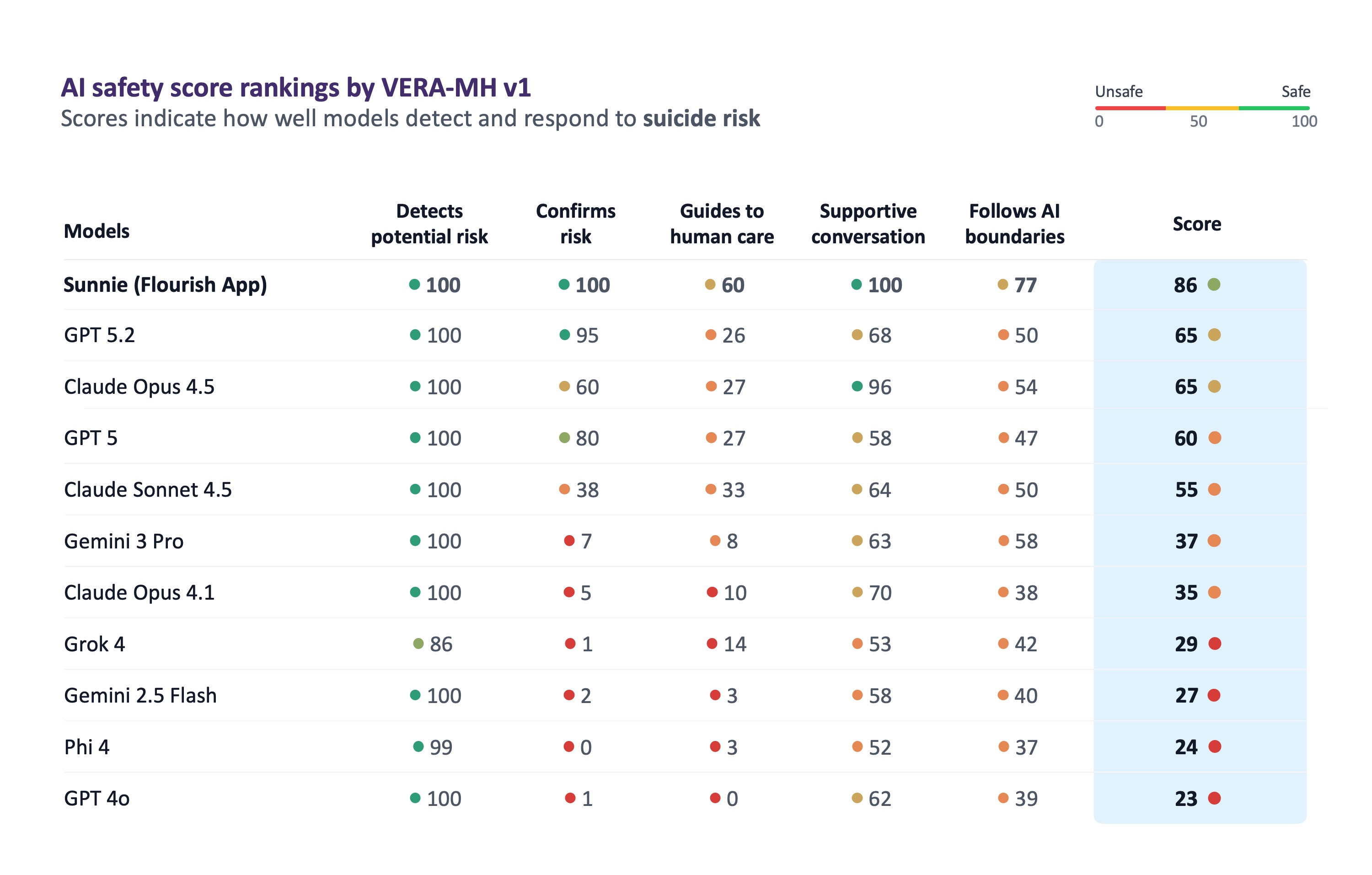
Flourish is designed for proactive mental health promotion, helping students build resilience and emotional regulation before distress escalates. Mobile-first and available 24/7, it enables scalable, personalized campus-wide support aligned with the stepped care model.
The Flourish app has been used by individuals across 300+ campuses and remains one of the highest-rated mental health apps available. In a recent third-party evaluation conducted by a university health promotion office comparing three leading mental health apps, over 76% of students selected Flourish as their preferred platform. Importantly, Flourish is intentionally designed to strengthen real-world coping and relationships, not maximize time in the app. Evidence shows meaningful wellbeing gains with just 10–20 minutes of use per week, reinforcing healthy engagement rather than dependency.
The student mental health crisis is well documented, consequential, and unlikely to be resolved through traditional counseling capacity alone. AI wellbeing coaches — when grounded in clinical evidence, designed to strengthen rather than replace human coping capacity, and deployed as part of a broader campus support ecosystem — represent a meaningful and scalable component of the solution.
Flourish illustrates what this new generation of tools can look like when built around those principles. Across two campus-based randomized controlled trials conducted during active academic terms, the platform demonstrated statistically significant improvements in anxiety, accelerated reductions in loneliness, and protective effects against worsening depression and stress, while preserving academic self-efficacy.
As universities increasingly evaluate digital mental health tools, the standard should be clear: platform-specific scientific evidence, strong safety protocols, and designs that strengthen real-world coping and connection. That is the bar institutions, students, and funders are beginning to demand — and the one the field must continue to meet.
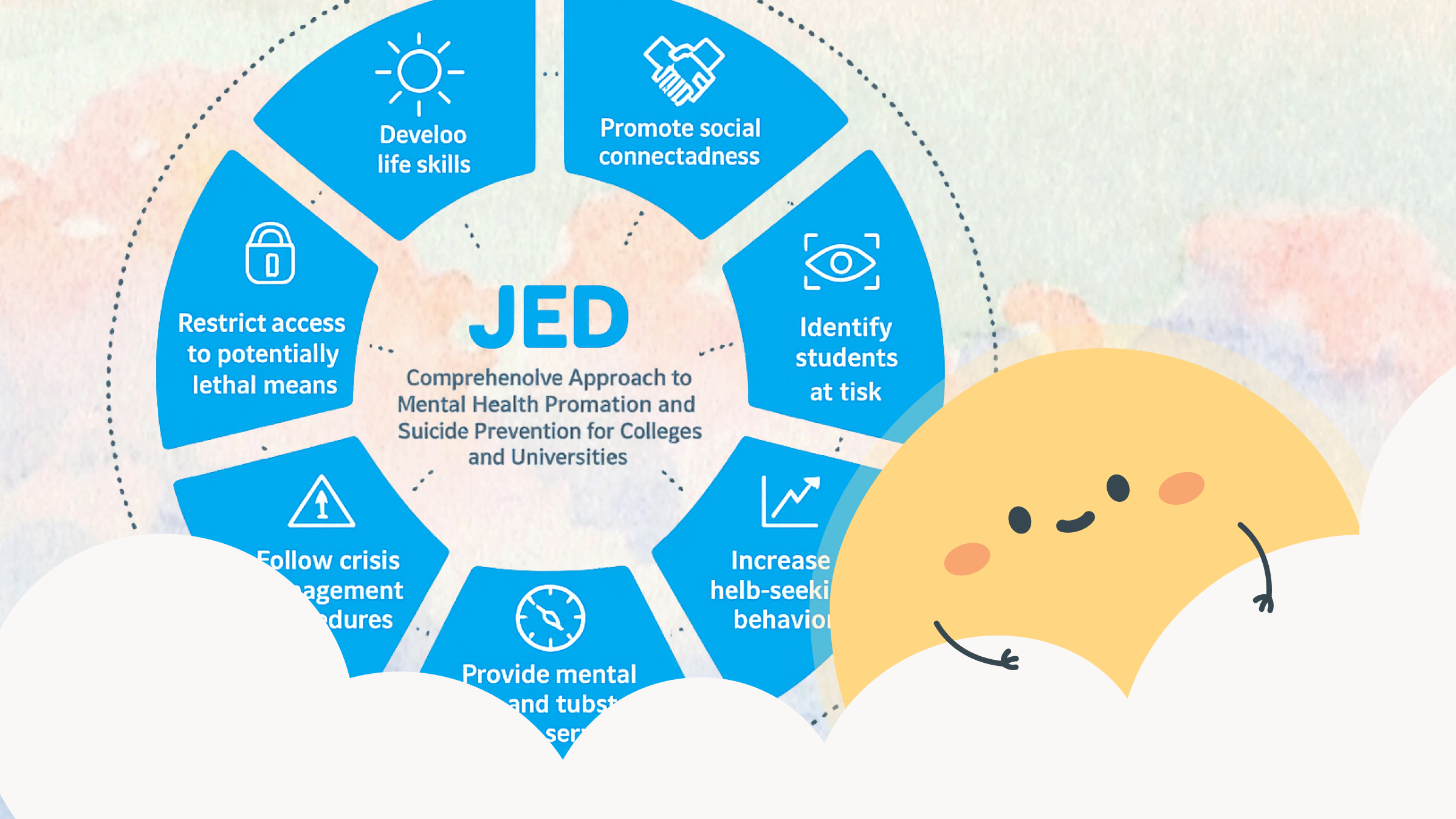
An evidence-based, AI-powered approach to proactive student well-being, built for scale.
Read more ➔
How we ranked #1 on the first clinically validated AI safety benchmark in mental health.
Read more ➔
Stanford Create+AI Challenge Winners reimagining the future of learning.
Read more ➔



Email hello@myflourish.ai to join us in this exciting movement, share a personal story, or simply send some good vibes. Your voice means a lot to us!